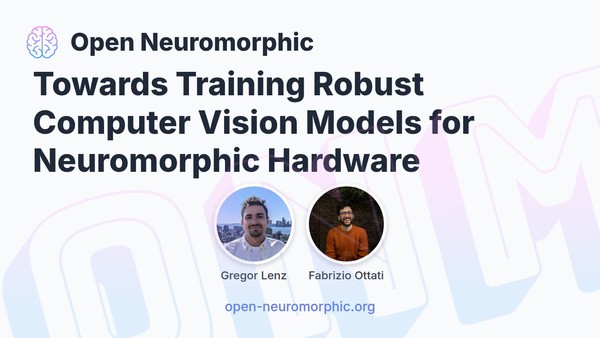
Training spiking neural networks (SNNs) on conventional, synchronous GPUs introduces severe deployment discrepancies when those models are run on asynchronous digital neuromorphic hardware. Reconciling this hardware-software gap requires specialized training algorithms and rigorous monitoring of intermediate network activity to ensure models remain robust and power-efficient once deployed to event-driven Edge chips.
Key Takeaways
- Training spiking neural networks (SNNs) in synchronous GPU simulations creates significant deployment discrepancies on asynchronous digital hardware.
- SynSense’s Speck chip relies on purely event-driven, non-leaky integrate-and-fire neurons to maintain ultra-low power consumption.
- The Exodus algorithm vastly accelerates backpropagation through time (BPTT) for SNNs, overcoming major GPU training bottlenecks.
- Detailed monitoring of intermediate layer firing rates is essential to prevent individual neurons from monopolizing activity and failing on-chip.
Workshop Format & Takeaways
The workshop explored the full pipeline of building Edge-ready vision models for SynSense’s Speck chip, beginning with data handling. The extreme temporal resolution of event cameras generates massive data bandwidth; a robust pipeline relies on tools like Tonic and specialized formats to efficiently cache and load event frames, preventing GPU starvation during training.
A primary focus was the simulation-to-hardware discrepancy. GPU training discretizes time, calculating convolutions in synchronous, batched operations. Conversely, neuromorphic chips process events sequentially and asynchronously. A transient cluster of events easily processed in a single GPU timestep can overwhelm physical hardware, leading to missed spikes and inaccurate real-world predictions.
To counteract this, the speaker detailed optimization strategies like reducing weight-to-threshold ratios and leveraging the Exodus algorithm to rapidly iterate via Backpropagation Through Time (BPTT). Furthermore, plotting individual neuron firing rates—rather than relying solely on layer-wide averages—ensures that activity remains adequately distributed, preventing “hot” neurons from causing hardware bottlenecks.
What This Means for Edge AI
Achieving true ultra-low power inference in consumer electronics requires more than just porting standard CNNs to new silicon. The performance gains of neuromorphic processors rely heavily on temporal sparsity; developers must adopt a holistic, hardware-aware approach to data representation and training to actually realize these massive power savings in real-world deployment.
About the Speakers

Gregor Lenz

Fabrizio Ottati
Upcoming Workshops
No workshops are currently scheduled. Check back soon for new events!
Are you an expert in a neuromorphic topic? We invite you to share your knowledge with our community.
Inspired? Share your work.
Share your expertise with the community by speaking at a workshop, student talk, or hacking hour. It’s a great way to get feedback and help others learn.